
Understanding the Portfolio Sustainability Assessment (PSA) Framework
The World Business Council for Sustainable Development’s (WBCSD) Portfolio Sustainability Assessment (PSA) provides a structured five-step framework that helps companies evaluate and transform their product portfolios toward long-term sustainability goals. It is designed to integrate environmental and social considerations into business decisions, ensuring resilience and alignment with global sustainability expectations.
12/8/20252 min read
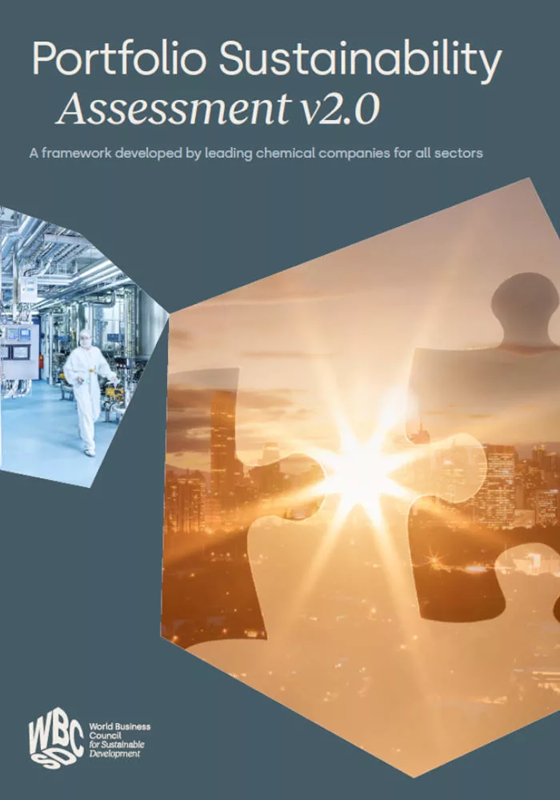

The Portfolio Sustainability Assessment (PSA) was first launched in 2018 and updated in 2023. It is widely adopted across chemical-intensive industries but applicable to all sectors. The PSA enables companies to identify risks, capture opportunities, and steer portfolios toward sustainable value creation.
At its core, the PSA is about system-level transformation—embedding sustainability into portfolio management rather than treating it as an add-on. Let’s break down the five steps:
The Five-Step Framework
1. Defining Scope & Objectives
Companies begin by clarifying the boundaries of the assessment: which products, services, or innovations are included.
Objectives are set to align with corporate sustainability strategies, regulatory requirements, and stakeholder expectations.
This step ensures the PSA is tailored to business priorities while remaining transparent and credible.
2. Segmenting
Portfolios are divided into logical segments (e.g., product categories, business units, or markets).
Segmentation allows companies to compare sustainability performance across different areas and identify where risks or opportunities are concentrated.
It creates a manageable structure for analysis.
3. Detecting Market Signals
External drivers such as regulations, consumer trends, investor expectations, and technological shifts are analyzed.
This step ensures companies are not only looking inward but also responding to emerging sustainability demands.
Detecting signals helps anticipate risks and position products for future relevance.
4. Categorizing Portfolio
Products are assessed against sustainability criteria and categorized into tiers (e.g., leading, transitioning, or at risk).
This categorization provides a clear picture of portfolio sustainability performance.
It highlights which products are aligned with long-term goals and which require redesign, substitution, or phase-out.
5. Reporting Results
Findings are consolidated into transparent reports that inform decision-making.
Reporting enables companies to communicate progress to stakeholders, investors, and regulators.
It also supports continuous improvement, as results can be tracked over time and benchmarked against peers.
Why PSA Matters
Evidence-based decisions: PSA provides a standardized methodology to evaluate sustainability performance.
Risk management: Identifies socio-environmental risks before they become liabilities.
Innovation driver: Encourages companies to embed circularity and sustainability into product design.
Stakeholder trust: Transparent reporting builds credibility with investors, regulators, and customers.
Take aways
The WBCSD’s PSA is more than a framework—it’s a strategic tool for transformation. By following its five steps, companies can align their portfolios with sustainability goals, anticipate market shifts, and strengthen resilience. In a world where sustainability is becoming a business imperative, PSA offers a roadmap to ensure that portfolios are not only profitable but also future-proof.