ISO 14000: Why Standardised Sustainability Processes Matter More Than Ever
Turning sustainability ambition into measurable action through ISO 14000 and process excellence.
12/17/20252 min read
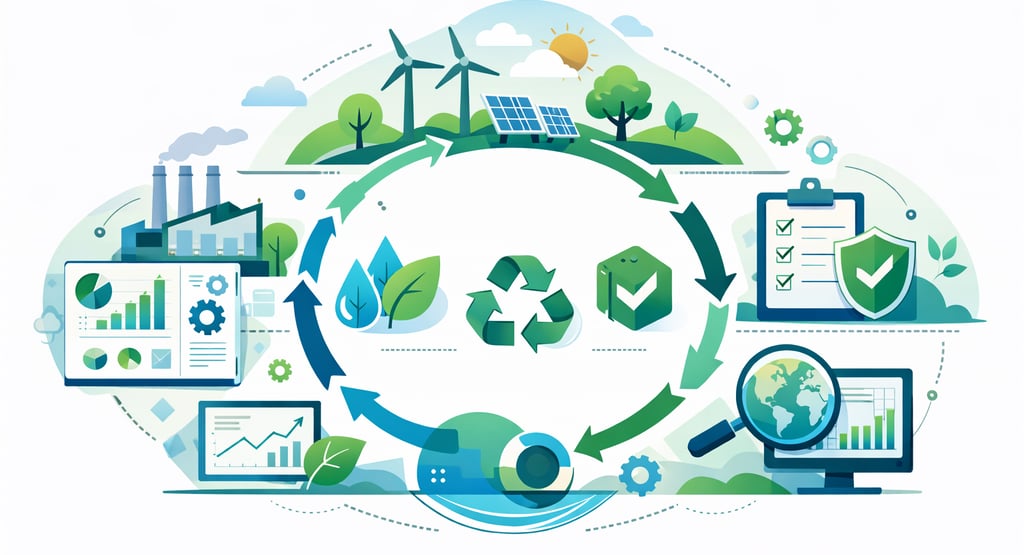
As organisations navigate sustainability, circularity, and emerging regulatory frameworks such as SSBD, one message is becoming increasingly clear: good intentions are not enough. Sustainable outcomes depend on robust processes, measurable systems, and internationally recognised standards. This is where the ISO 14000 family of standards plays a critical role.
What Is ISO 14000?
ISO 14000 refers to a family of international standards focused on environmental management. Unlike prescriptive regulations, ISO 14000 provides a structured framework that enables organisations to systematically manage, monitor, and improve their environmental performance.
At the core of this family is ISO 14001, which specifies requirements for an Environmental Management System (EMS). The standard is applicable to organisations of all sizes and sectors and focuses on embedding sustainability into everyday business processes.
Sustainability Requires Systems, Not Statements
Many sustainability strategies fail because they remain aspirational rather than operational. ISO 14000 addresses this gap by translating sustainability goals into repeatable, auditable processes.
Key principles include:
Identification of environmental aspects and impacts
Risk-based thinking and opportunity assessment
Defined roles, responsibilities, and accountability
Continuous improvement through the Plan–Do–Check–Act (PDCA) cycle
This process-driven approach ensures sustainability is not dependent on individual champions but is embedded into organisational DNA.
The Role of Standardisation in Sustainability
Standardisation is often misunderstood as a constraint. In reality, it is an enabler of scale, consistency, and credibility.
ISO 14000 provides:
Common language for environmental performance across supply chains
Comparable metrics for monitoring progress and reporting
Consistency across sites, regions, and operations
Credibility with regulators, investors, and customers
For organisations operating in global or complex value chains, standardisation is essential to avoid fragmented sustainability efforts.
Supporting Circularity Through ISO 14000
Circular economy initiatives require tight coordination between design, sourcing, operations, and end-of-life management. ISO 14000 supports circularity by:
Encouraging lifecycle thinking
Integrating resource efficiency into operational controls
Supporting waste reduction, reuse, and recycling strategies
Enabling data-driven decisions on materials and processes
Standards such as ISO 14040/44 (Life Cycle Assessment) complement ISO 14001 by providing methodologies to assess environmental impacts across product lifecycles.
Alignment with SSBD and Emerging Disclosure Requirements
With increasing focus on sustainability disclosures and performance-based reporting (including SSBD-related expectations), organisations need defensible, auditable data.
ISO 14000 helps organisations:
Establish reliable data collection processes
Ensure traceability and documentation
Reduce greenwashing risks
Demonstrate due diligence and governance
By aligning internal processes with recognised standards, companies are better prepared for regulatory scrutiny and stakeholder expectations.
Continuous Improvement, Not One-Time Certification
ISO 14000 is not a box-ticking exercise. Its real value lies in its emphasis on continuous improvement. Organisations that use the standard effectively:
Regularly review performance
Adapt to regulatory and market changes
Integrate innovation into environmental management
Strengthen long-term resilience
Certification may be the starting point, but process maturity is the real outcome.
Conclusion: Sustainability Needs Structure
In a world where sustainability, circularity, and transparency are no longer optional, ISO 14000 provides the structure, discipline, and credibility organisations need to move from ambition to action.
By adopting standardised processes and internationally recognised frameworks, companies can build sustainable systems that are measurable, scalable, and aligned with both business strategy and societal expectations.
Sustainability succeeds when it is standardised, systematic, and continuously improved.