
Data Before Declarations: Building Credible Sustainability Metrics That Withstand Scrutiny
Sustainability credibility isn’t built on declarations — it’s built on data. Discover why traceability, auditability, and disciplined systems are now essential for trustworthy sustainability metrics.
12/23/20252 min read
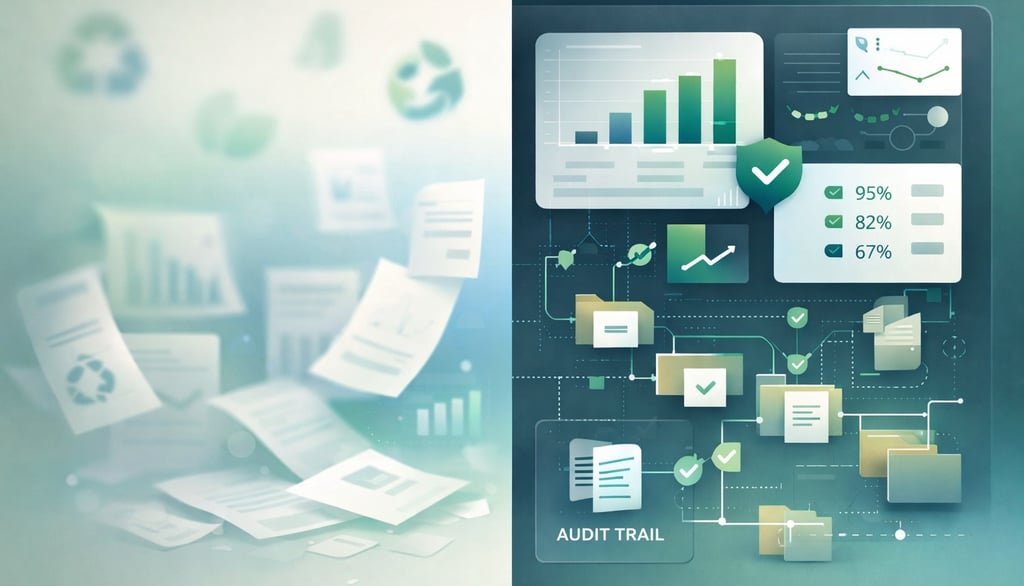

Sustainability claims are under increasing scrutiny. Regulators, investors, and customers are no longer satisfied with aspirational statements or selective metrics. They want evidence.
In this environment, the organisations at greatest risk are not those with weak sustainability performance — but those with weak data.
The Problem with Sustainability Declarations
Many sustainability reports are built around declarations rather than measurements. Common issues include:
Inconsistent methodologies year to year
Estimates without documented assumptions
Metrics that cannot be traced to source data
Selective reporting that highlights positives and omits risks
These weaknesses expose organisations to greenwashing claims, regulatory risk, and loss of credibility.
Measurement Is a Management Issue, Not a Reporting One
Credible sustainability data does not start in a report — it starts in operations.
Robust metrics require:
Clear definitions and boundaries
Assigned data ownership and accountability
Standardised data collection processes
Documented calculation methods
Controls over data quality and changes
Without these elements, sustainability data cannot support decision-making or withstand external scrutiny.
Traceability and Auditability Are Now Essential
Emerging disclosure requirements increasingly expect sustainability data to be traceable and auditable, similar to financial information.
Organisations should be able to answer:
Where did this data come from?
Who collected and validated it?
What assumptions were used?
How was it reviewed and approved?
If sustainability data cannot be explained, replicated, and defended, it should not be published.
Avoiding Greenwashing Through Process Discipline
Greenwashing is rarely the result of deliberate misrepresentation. More often, it stems from poor systems and weak controls.
Organisations reduce greenwashing risk by:
Aligning claims strictly with verified data
Avoiding vague or unqualified statements
Ensuring consistency across disclosures, marketing, and internal reporting
Applying internal review and approval processes
Governance and discipline — not disclaimers — are the most effective safeguards.
Using Management Systems to Strengthen Data Quality
Established management systems provide a strong foundation for sustainability metrics.
Standards such as ISO 14001 and ISO 9001 support:
Defined processes and responsibilities
Document control and record keeping
Internal audits and corrective actions
Continuous improvement of data quality
Leveraging these systems reduces duplication and increases confidence in reported information.
From Metrics to Meaningful Decisions
High-quality sustainability data is not just about compliance — it improves business performance.
When data is credible, organisations can:
Identify real risks and inefficiencies
Prioritise investments and initiatives
Track progress over time
Communicate with confidence and transparency
Data becomes a strategic asset, not a reporting burden.
Credibility Starts with Measurement
In today’s sustainability landscape, what you can prove matters more than what you promise.
Organisations that focus on measurement, traceability, and auditability build trust — and resilience. Those that rely on declarations without data expose themselves to scrutiny and risk.
Sustainability credibility is built on systems, evidence, and discipline — not slogans.