
Circularity Is Not a Sustainability Strategy: It’s a Business
Circularity is often treated as a sustainability goal. In reality, it’s a strategic business model choice that determines whether value is created—or destroyed.
12/15/20252 min read
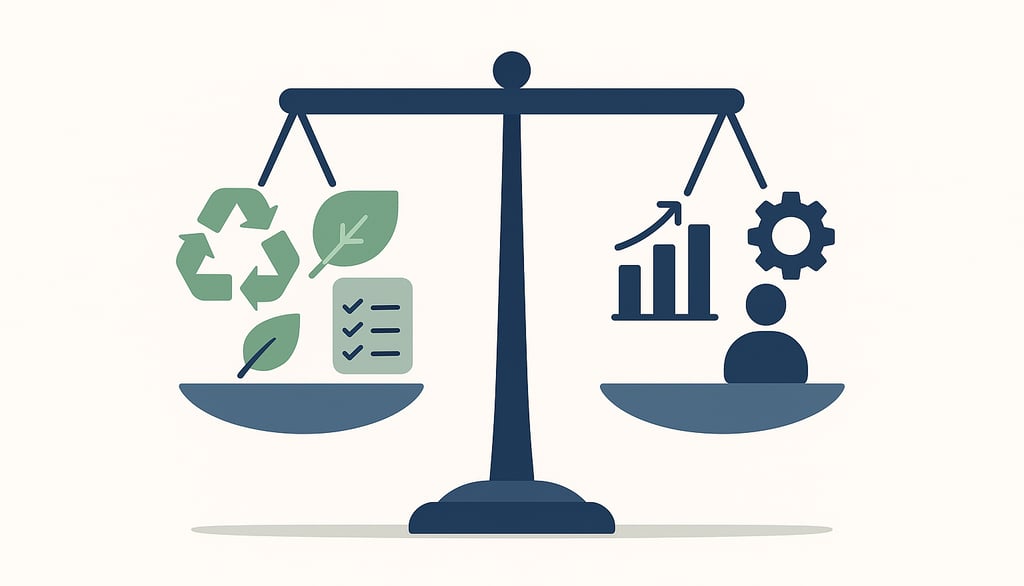

Circularity is often presented as an obvious next step for any company serious about sustainability. Recycled materials, take-back schemes, product life extension—on paper, it all looks straightforward.
In practice, most circular initiatives stall after the pilot phase.
Not because circularity “doesn’t work,” but because it is treated as a sustainability initiative rather than what it actually is: a business model decision.
Why Circularity Efforts Commonly Fail
Many companies approach circularity with the best intentions—and the wrong framing.
Typical starting points include:
A sustainability target to “increase circularity”
Pressure from customers or regulators
A desire to improve ESG ratings or brand perception
The result is often:
Isolated pilot projects
Marginal design changes
Circular claims that are difficult to scale or verify
What’s missing is a fundamental question:
How does circularity create value in our business?
Without a clear answer, circularity becomes an add-on—competing with cost, speed, and performance rather than reinforcing them.
Circularity Is Not One Thing
One of the biggest sources of confusion is that “circularity” is used to describe very different levels of ambition.
1. Circular Claims
Using recycled content, offering limited take-back, or improving recyclability without changing the core product or value proposition.
These actions can be useful—but they rarely change the economics of the business.
2. Circular Design
Designing products for durability, repair, modularity, or material recovery.
This is where complexity increases:
Design decisions affect sourcing, manufacturing, logistics, and compliance
Trade-offs emerge between cost, performance, and sustainability
3. Circular Value Creation
Redesigning how value is captured:
Product-as-a-service models
Refurbishment and resale
Long-term customer relationships instead of one-time transactions
This is where circularity becomes strategic—and where most companies hesitate.
The Real Question: Where Does Circularity Sit in Your Business Model?
Circularity only works when it aligns with how your company makes money.
Before investing further, leadership teams should be able to answer:
Who owns the product at end-of-life—and why?
Where is value created: volume, margin, service, data, or longevity?
How does circularity affect cash flow, risk, and customer behavior?
What capabilities are required that we don’t currently have?
If these questions remain unanswered, circularity will remain a cost center rather than a value driver.
Circularity Creates Winners—and Losers
An uncomfortable truth: circularity is not universally beneficial.
For some companies, it leads to:
Higher operational complexity
Increased capital requirements
Reduced short-term margins
For others, it creates:
Differentiation in regulated markets
Stronger customer lock-in
Lower long-term material risk
Faster compliance with evolving SSBD and Ecodesign requirements
The difference lies in strategic fit, not ambition.
From Sustainability Initiative to Strategic Choice
Treating circularity as a business model decision changes the conversation:
From “What can we recycle?”
to “What should we design for longevity—and why?”From “How do we meet requirements?”
to “How do we stay competitive as requirements increase?”From isolated pilots
to integrated product and portfolio decisions
This shift is often where internal teams struggle—because it sits between sustainability, product development, finance, and strategy.
A Final Thought
Circularity is not a badge of honor.
It is a design and strategic commitment with long-term consequences.
Companies that succeed are not the ones doing the most—but the ones making deliberate, economically grounded choices.
And increasingly, those choices will determine not just sustainability performance, but market access and competitiveness.
If you are currently translating circularity or SSbD requirements into product or business decisions, this is often where internal teams reach their limits.