
Circularity Is Not a Recycling Program: How Businesses Get the Circular Economy Wrong
True circularity begins with design and strategy, not waste diversion or marketing claims.
12/22/20252 min read
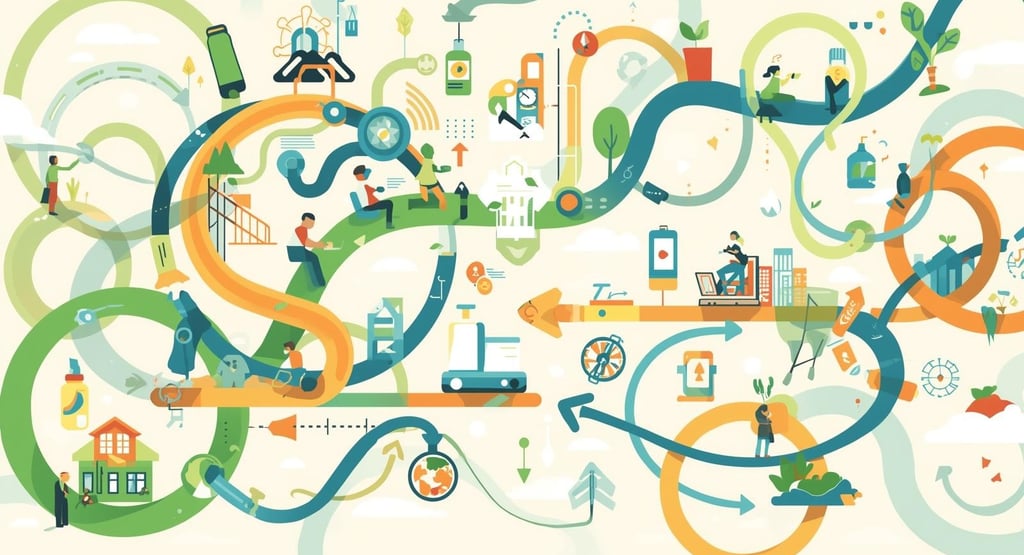
Circularity has become one of the most frequently used — and misunderstood — concepts in sustainability. Many organisations proudly announce recycling targets, packaging changes, or pilot projects and label them “circular economy initiatives.” In reality, recycling is only a small component of circularity, and focusing on it alone often distracts from the structural changes required.
Circularity is not a communications theme or a waste program. It is a business model transformation.
The Most Common Circularity Misconception
The most widespread misconception is that circularity equals end-of-life waste management. As a result, organisations often concentrate their efforts on:
Recycling rates and waste diversion
Consumer-facing sustainability claims
Isolated pilots disconnected from core operations
Downstream fixes to upstream design problems
While these actions may reduce waste, they do not fundamentally change how value is created, captured, or preserved.
True circularity starts long before products become waste.
Circularity Begins with Design and Strategy
Circular business models focus on keeping products, materials, and resources in use at their highest value for as long as possible. This requires early-stage decisions, including:
Product and packaging design for durability, repair, and reuse
Material choices that consider availability, toxicity, and recovery
Business models that enable take-back, refurbishment, or remanufacturing
Supplier and partner alignment across the value chain
Without these strategic foundations, recycling becomes an expensive workaround rather than a value driver.
Why Circularity Fails When It Is Treated as a Side Project
Many circular initiatives fail because they sit outside core business decision-making. Typical warning signs include:
Circularity owned by sustainability or communications teams only
No integration with procurement, product development, or finance
Lack of performance metrics beyond high-level waste data
No accountability for economic outcomes
When circularity is not governed like other strategic priorities, it remains fragile, underfunded, and easy to deprioritise.
Circularity as a Business Model
Successful circular organisations treat circularity as a source of competitive advantage, not a cost or obligation.
This means aligning circular initiatives with:
Cost reduction through resource efficiency
Revenue opportunities from services, reuse, or secondary markets
Risk reduction related to resource scarcity and regulation
Long-term resilience of supply chains
Circularity becomes sustainable when it creates business value, not when it only improves optics.
The Role of Systems, Data, and Governance
Circularity requires coordination across functions, sites, and partners. This is where systems and governance matter.
Effective circular models are supported by:
Clear ownership and decision rights
Defined processes and performance indicators
Reliable data on material flows and lifecycle impacts
Integration with environmental and quality management systems
Standards such as ISO 14001 and ISO 14040/44 (Life Cycle Assessment) provide proven structures to support circular thinking beyond pilot projects.
Conclusion: Circularity Requires Structural Change
Recycling is necessary — but it is not circularity.
Organisations that succeed in the circular economy rethink how products are designed, how materials are sourced, and how value is retained over time. They treat circularity as a business transformation, supported by governance, data, and operational discipline.
Circularity delivers impact only when it is embedded into how the business works — not how it communicates.